
History
Middle Ages
Since the middle ages, people with walking difficulties had to rely on walking sticks and crutches.
17th Century
Stephan Farffler invented the wheelchair. This was an important milestone for many people to enhance mobility.
1865
Everett H. Dunbar introduced the first documented commercial arch support in 1865 by inserting leather pieces between the insoles of boots.
1953
In 1953 George Klein and his team invented the first motorized wheelchair. The invention might be known as the Klein Chair.
2010
In 2010, modern wearables began to be commercialized. Some sensors that can tell you how a person is walking. These are things like speedometer, accelerometers, stride sensors, dynamometers, pedometers etc. These sensors currently do not diagnose if there is anything abnormal with the way you walk or if your problems with walking could be linked to a medical condition
Present Technology:
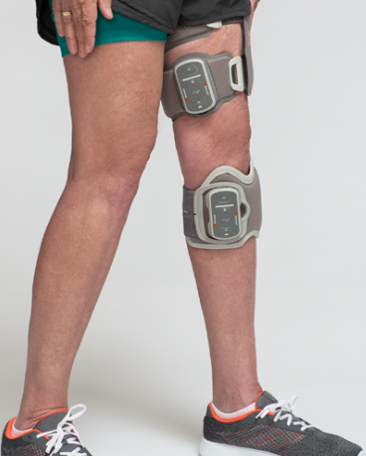
Bioness
A device that treats Foot Drop. It uses functional electrical stimulation (FES), 3D motion detection, and an app to stimulate damaged muscles. It is a bulky knee cuff that has limited coverage addressing only handful of conditions.

Insoles
Another device that helps people’s gait are insoles. However, these are analog and do not give information in real time. They also have to be sized by a professional and changed periodically.
Sensors


There are also sensors that measure heart health, sleep, oxygen, steps, and activity; but they are not able to correct your problem real time. The most common ways people use sensors are for monitoring, automation, and safety. These are present in wearable technology such as watches and rings. However, the sensors have several limitations in accuracy.